
READINGS FOR THE FIFTEENTH SUNDAY IN ORDINARY TIME, YEAR C, SUNDAY 13TH JULY, 2025.
First Reading: Deuteronomy 30:10-14
Psalm: 68
Second Reading: Colossians 1:15-20
Gospel: Luke 10:25-37
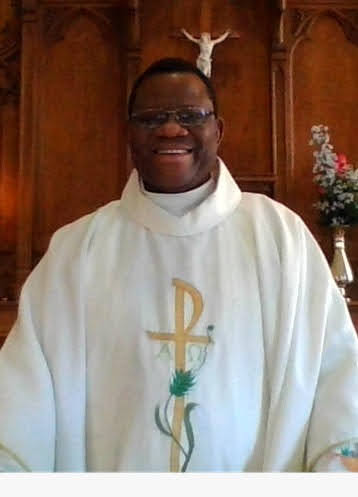
REFLECTION BY FR CORNELIUS NWAOGWUGWU, CM.
LOVE OF NEIGHBOUR AND ETERNAL LIFE.
Dear brothers and sisters in Christ,
A sincere welcome to our Eucharistic celebration today, the Fifteenth Sunday in Ordinary Time, Year C.
My reflection today, focuses on love of neighbour and eternal life. I pray honestly that my reflection by the grace of God will lead us to the deep inner connection between our love of God and the love of our neighbours experienced in the actual circumstances of our everyday lives. May my reflection today help us to lift up our hearts, to praise and thank the Lord for His presence in our lives.
Many scholars have asked pertinent questions about the realities of a neighbour and the existence of eternal life. They have asked about the meaning of eternal life. How can we prove the existence of eternal life? How can we attain eternal life? Who is my neighbour? To what extent are we good neighbours to the wounded, the poor and the lonely? How can we reflect Christ’s love in our communities? These and many other questions challenge us to move beyond indifference. These questions plunge us into the realities of eternal life and how we live now with each other. Experience has showed me that the path to eternal life is paved with compassion, humility and a heart open to God and others.
In support of my experience, Moses in today’s First Reading from the book of Deuteronomy, reminds us that God’s commandments are not distant or unreachable. He says: God’s commandments are “very near.” They are written on our hearts. They are accessible through faith, humility and obedience. This passage foreshadows Christ, the Word made flesh, who brings the law to life within us. (Deuteronomy 30:10–14).
In the same manner, St. Paul echoes this experience in his letter to the Romans. For St. Paul, it shows that righteousness comes not through performance but through faith in Christ, who descended and rose again to bring salvation close to all. (Romans 10). In line with this experience, St. Paul in his letter to the Colossians presents a majestic hymn to Christ, “the image of the invisible God,” through whom all things were created and reconciled. St. Paul in today’s Second Reading, sees this as a cosmic vision of salvation. For Paul, Christ is the beginning and the end, the one who holds all things together. Eternal life from this perspective flows from the reconciliation Jesus Christ gave to humanity. It means that Christ’s death and resurrection restore our broken relationship with God and with one another. This is the highest manifestation of love for our neighbour. (Colossians 1:15–20).
Inspired by this teaching, today’s Psalmist testifies that our God is full of justice and mercy. He is “Father of orphans and protector of widows.” He lifts the lowly and scatters the proud. This psalm reveals God’s preferential love for the vulnerable. It resonates deeply with the Church’s social teaching. In this context, eternal life is a present reality that begins when we live in communion with God, love and care for those in need. (Psalm 68).
In our Gospel Reading today, “there was a lawyer who, to disconcert Jesus, stood up and said to him, ‘Master, what must I do to inherit eternal life?’ Jesus said to him, ‘What is written in the Law? What do you read there?’ He replied, ‘You must love the Lord your God with all your heart, with all your soul, with all your strength, and with all your mind, and your neighbour as yourself’. ‘You have answered right,’ said Jesus ‘do this and life is yours.” When asked how to inherit eternal life, Jesus affirms the law of love: love God and love your neighbour. But he doesn’t stop there. He tells the parable of the Good Samaritan, showing that our neighbour is anyone in need, regardless of race, religion or status. This parable is a call to mercy, love, solidarity and action. (Luke 10: 25-37).
The Lawyer said to Jesus, “who is my neighbour?” In responding to this question, Jesus used the parable of the Good Samaritan to define a neighbour. Anyone in need is my neighbour. This definition of neighbour shows that love is the way to attain eternal life. Jesus declared that the greatest commandment is Love of God and Love of neighbour. Confirming this teaching, Jesus asked the Lawyer, “which of these three, do you think, proved himself a neighbour to the man who fell into the brigands` hands?’ ‘The one who took pity on him’ he replied. Jesus said to him, ‘Go, and do the same yourself.” (Luke 10: 25-37). It means therefore that love is the fulfilment of all laws. This is in line with St Paul’s observation when he said: “He who loves his neighbour has fulfilled the whole law.” (Romans 13:8). In his unconditional love, Jesus reconciles us back to God the Father in the unity of the Holy Spirit. Eternal life in this context is received through grace lived out in love.
We are invited to emulate Christ our Lord who completely showed himself as a neighbour to humanity by shedding His blood on the cross of Calvary for our salvation. We are called to practice unconditional love and to be willing to make sacrifices for the good of our neighbours. We must be Good Samaritans to our neighbours and care for them.
May God help us to always treat our neighbours with love, kindness, care, compassion, honour, dignity and mercy now and for ever. Amen.
Fr. Cornelius Nwaogwugwu, CM.