
READINGS FOR SECOND SUNDAY OF EASTER, YEAR A, (DIVINE MERCY SUNDAY), SUNDAY 12TH APRIL, 2026.
First Reading: Acts 2:42-47
Psalm: 117
Second Reading: 1 Peter 1:3-9
Gospel: John 20:19-31
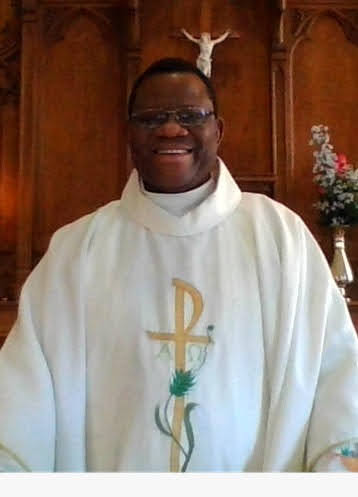
REFLECTION BY FR CORNELIUS NWAOGWUGWU, CM.
EXPERIENCING THE JOY OF THE MERCY OF GOD.
Dear Brothers and Sisters in Christ,
Today is the Second Sunday of Easter. It is also called Divine Mercy Sunday. On this special day, I offer you the message of God’s Mercy that gives light and joy to our hearts. The readings for this Sunday are about God’s mercy. The Risen Lord gave his apostles the power to forgive sins with the words, “Whose sins you forgive are forgiven them, and whose sins you retain are retained.” (John 20:23).
On this Divine Mercy Sunday, the Merciful Saviour says to us, “For I, the Lord your God, I am holding you by the right hand; I tell you, do not be afraid; I will help you.” (Isaiah 41:13). In the same way, the Prophet Zachariah says, “By the tender mercy of our God, the dawn from on high will break upon us, to give light to those who sit in darkness and, in the shadow of death, to guide our feet into the way of peace.” (Luke 1:78-79). Pope John Paul II said: “Apart from the mercy of God there is no other source of hope for mankind.”
The readings for today’s celebration show the necessity for our trust in God’s forgiveness of our sins. God revealed His mercy to the world by sending His only begotten Son to become our Saviour and Lord by His suffering, death and resurrection.
The First Reading shows us the activities of the early Church and how they grew every day in number because of acts of mercy, prayer, charity, signs and wonders worked among the people at the hands of the apostles. Members of the early Church expressed their love and mercy by supporting each other. The early Church had a good sense of community living and were merciful and prayerful. (Acts 2:42-47).
The Second Reading expresses Peter’s joy in the resurrection of Jesus Christ. He said: “Blessed be God the Father of our Lord Jesus Christ, who in his great mercy has given us a new birth as his sons, by raising Jesus Christ from the dead, so that we have a sure hope and the promise of an inheritance that can never be spoilt or soiled and never fade away, because it is being kept for you in the heavens.” (1 Peter 1:3-9). This is a joyful and spirit filled expression of hope and faith in the risen Lord, Jesus Christ. Peter has shown us an example to follow in our expression of faith in the resurrection of Jesus Christ.
The Book of Revelation reveals John’s encounter with the risen Lord. It shows how we can practice works of mercy without fear or favour. The risen Lord said, “Do not be afraid; it is I, the First and the Last; I am the Living One.” (Revelation 1:9-13, 17-19).
Today’s Gospel narrates how Jesus instituted the Sacrament of Reconciliation, a sacrament of Divine Mercy. Also, it describes how Jesus entrusted to the apostles His mission of preaching the “Good News” of God’s love, mercy, forgiveness and salvation. The Gospel illustrates how Jesus showed Divine Mercy to the doubting apostle Thomas who professed faith in Jesus Christ in a unique way. He said “My Lord and my God.” (John 20:19-31).
In today’s Gospel, Thomas, called the Twin, was not with the disciples when Jesus appeared to them after His resurrection. When the other disciples said to Thomas that they have seen the risen Lord, he doubted. Thomas said “unless I see the holes that the nails made in his hands and can put my finger into the holes they made, and unless I can put my hands into his side, I refuse to believe.” Thomas insisted that the risen Lord must fulfil his own condition if he is to believe. The risen Lord understood the difficulties of Thomas.
Eight days later, Jesus came into the house where the disciples were with Thomas. He spoke to Thomas, “Put your finger here; look, here are my hands. Give me your hand; put it into my side. Doubt no longer but believe.” At this point, Thomas professed faith in the risen Lord, “My Lord and my God.” Jesus made a powerful statement: “You believe because you can see me. Happy are those who have not seen and yet believe.” Thomas understood that it was not for him to tell God how things should be.
Thomas doubted in order to know more. When he was convinced he expressed deep faith in the risen Lord. The faith of Thomas was challenged and this made him see the limitedness of his reasoning and doubt. Thomas shared in the joy and peace of the risen Lord.
We ask ourselves some questions. In the seemingly endless demands of limited activities, are we able to find enough time to respond adequately and calmly to the Risen Lord’s joy, peace, love and mercy? Do we recognize our limitations and need for God’s Mercy?
The truth is that we are all sinners in need of God’s mercy and compassion.
We need to kneel humbly before God and ask for his mercy and forgiveness. We are not perfect but with God’s help, we are striving to be perfect. What we need to do is to recognize our unworthiness, limitations and emptiness before the perfect God. We need to open our hearts to be filled by God who is full of mercy and compassion.
God’s mercy brings about conversion. True forgiveness strengthens our faith to the joy, peace, love and mercy of the risen Lord. God’s Mercy is unlimited and boundless. The Divine Mercy of God is unfathomable and unrestrictive. God always tells us sinners not to sin again.
On this day of Divine Mercy, we are challenged to examine ourselves, to acknowledge our own sins, seek forgiveness and be sorry about them. The greatest truth for us sinners is that God wants to pay no attention to our failures, but wishes us to respond joyfully to His love and mercy. God releases through his Divine Mercy unimaginable graces to those who trust him.
We are called to express deep rooted faith in the risen Lord whose Divine Mercy is limitless, boundless and unfathomable. We are urged to accept God’s invitation to practice mercy and forgiveness. “Be merciful, just as your Father is merciful.” This command requires that we show mercy to each other by our kind and supportive words. We can also express mercy by our prayers for each other. The main focus of the Divine Mercy devotion “is the merciful love of God and the desire to let that love and mercy flow through one’s own heart towards those in need of it.”
Supporting this view, St. Teresa of Calcutta said: “If we pray, we will believe; if we believe, we will love; if we love, we will serve. Only then we put our love of God into action.” Jesus calls us to be willing to place ourselves in the pain and struggle of others and bring the joy and peace of Easter into hearts trapped in different forms of the “valley of darkness.” We are invited as followers of Christ to show mercy and identify with those in need.
Responding to this invitation, St. Vincent de Paul identified those in greatest need as “our Lords and Masters.” St. Vincent encountered Jesus in a striking way in the person of the poor. He no longer lived for himself. He served Jesus wholeheartedly in persons who are experiencing poverty in various forms.
St. Faustina’s exemplary life has shown that if we listen and do what Jesus Christ, our merciful and risen Saviour has taught us; most certainly, we will experience God’s Divine Mercy and inherit eternal life. We are encouraged to do works of mercy and charity.
Together, we say, “Divine Mercy, enclosed in the Heart of Jesus for us and especially for sinners, I trust in you.” “Most merciful Jesus, I trust in You. May I trust you always and in all things. May I daily surrender to Your Divine Mercy. Most Blessed Virgin Mary, Mother of Mercy, Pray for us as we turn to you in our need.” Amen.
Fr. Cornelius Nwaogwugwu, CM